
Cart
Your shopping cart doesn't have any products yet!
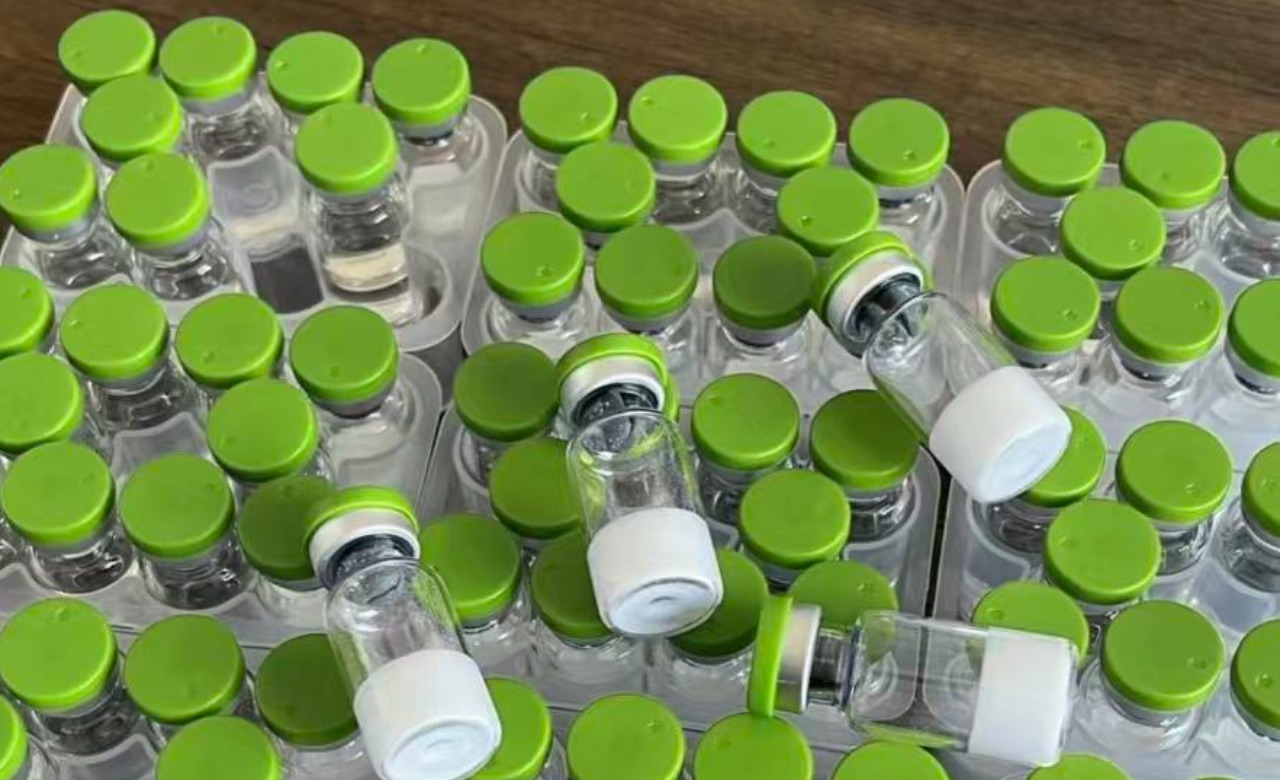
Chemical degradation is often the first concern when a peptide is held in solution or exposed to stress. ICH Q1A explicitly treats hydrolysis across a wide pH range as a relevant stress-testing consideration for substances in solution or suspension, and contemporary reviews of peptide formulation science identify hydrolysis, deamidation, and oxidation as recurring aqueous-solution liabilities for many peptide systems. In other words, once a peptide is no longer in a dry state, solution chemistry usually becomes more important, not less.
Light and oxidative exposure are similarly important. ICH Q1B states that light testing should be an integral part of stress testing, and ICH Q5C places oxidation and light among the environmental variables to which proteins and polypeptides are particularly sensitive. For research settings, that means light protection is not just a shipping concern. It is part of preserving a peptide’s documented identity through receiving, storage, and bench handling.
Physical instability can be just as consequential as chemical change. Reviews of peptide aggregation make clear that physical stability is affected by concentration, interfaces, temperature history, and molecular design, while broader protein and peptide stability reviews warn that repeated freeze-thaw exposure can promote adsorption at air-water, ice-water, and container interfaces. Earlier container-surface work also found measurable adsorption across pharmaceutical storage materials, with glass showing greater binding under the experimental conditions examined.
Dry solids are not exempt from instability. Solid-state protein and peptide literature shows that dried systems still depend on residual moisture, glass transition behavior, and storage temperature, and classic lyophilized antibody work demonstrated that moisture content can materially influence long-term stability outcomes. For research peptides supplied as dry solids, moisture control and container integrity therefore remain central, even before any later analytical workflow begins.
The table below summarizes the main stability drivers that laboratories usually evaluate when building a storage and handling framework for RUO peptides.
| Risk factor | Common failure mode | Why it matters in laboratory research | Typical documentation or review point |
| Temperature excursion | Accelerated chemical degradation or aggregation | Rates of change can shift during transport or out-of-range storage, complicating lot comparability. | Batch label, hold-time record, and excursion log |
| Light exposure | Photodegradation or photo-oxidation | Light-sensitive material can drift outside expected impurity or identity profiles without obvious visible change. | Light-protective packaging and handling notes |
| Moisture ingress in dry solid | Higher molecular mobility and weaker solid-state stability | Residual or absorbed moisture can alter long-term stability of dried peptide or protein systems. | Container closure integrity and dry-state storage statement |
| Solution-state hold | Hydrolysis, deamidation, and oxidation | Aqueous environments usually increase exposure to chemically relevant stresses. | Documented solution hold time and any stability rationale |
| Freeze-thaw cycling | Interface stress, adsorption, and aggregation | Repeated cycling can change recovery and physical stability even when nominal storage temperature appears acceptable. | Cycle count and post-event analytical review when justified |
| Container and surface interaction | Adsorptive loss or destabilization |